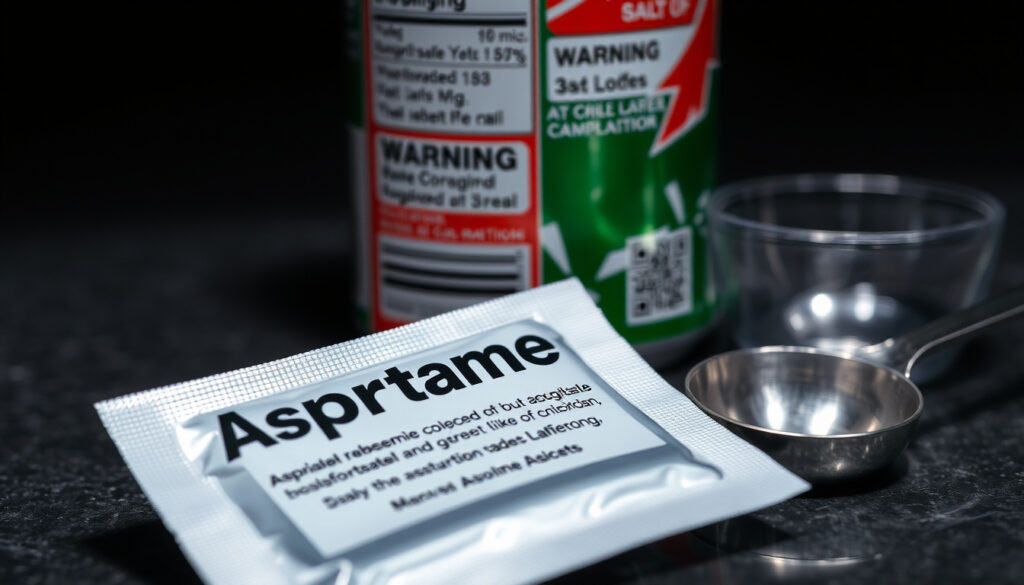
Is Aspartame Bad for You? Safety, Side Effects & Daily Limits
You’ve probably seen the headlines: diet soda ingredient declared “possibly carcinogenic” by one global body, while another says it’s perfectly safe. That’s the confusing reality of aspartame—an artificial sweetener that has managed to be both a diet staple and a source of lingering doubt. This article cuts through the conflicting advice to show you exactly what the science says about aspartame safety, daily limits, and how it stacks up against ordinary sugar.
Acceptable Daily Intake (JECFA): 40 mg per kg of body weight ·
IARC Classification (2023): Group 2B (possibly carcinogenic to humans) ·
FDA Position (2025): No safety concerns under approved conditions ·
Sweetness relative to sugar: 200 times sweeter ·
PKU contraindication: Not suitable for people with phenylketonuria
Quick snapshot
- Aspartame does not raise blood glucose levels (American Cancer Society)
- FDA and JECFA have set acceptable daily intakes (WHO)
- Not suitable for people with phenylketonuria (American Cancer Society)
- Whether aspartame contributes to cancer in humans at normal consumption levels (WHO)
- Long-term effects on kidney and liver function at moderate intake (WebMD)
- Mechanism and magnitude of possible neurological side effects (American Cancer Society)
- Regulators continue to assess new studies; no immediate global ban expected (Health Canada)
- Consumer focus shifting to alternative sweeteners like stevia and allulose (CDC)
Six key facts about aspartame, one pattern: regulatory consensus on daily limits masks lingering disagreement on whether the sweetener actually poses a cancer risk at real-world levels.
| Label | Value |
|---|---|
| Chemical name | L-aspartyl-L-phenylalanine methyl ester |
| Calories per gram | 4 (but used in trace amounts) |
| FDA approval year | 1981 |
| ADI by FDA | 50 mg per kg of body weight per day |
| ADI by JECFA | 40 mg per kg of body weight per day |
| Population contraindicated | People with phenylketonuria (PKU) |
The same molecule earns a “possibly carcinogenic” label from one UN body (IARC) and a clean bill of health from another (JECFA) on the same day. Consumers are left to navigate a gap that regulators themselves have not resolved.
Is aspartame worse for you than sugar?
Comparing aspartame and sugar means weighing two very different risk profiles. Sugar is linked to obesity, metabolic syndrome, and obesity-related cancers, while aspartame carries a theoretical cancer signal from animal studies. Three dimensions illustrate the trade-offs.
Caloric impact and weight gain mechanisms
- Aspartame provides virtually zero calories—200 times sweeter than sugar, used in trace amounts (American Cancer Society)
- Sugar (sucrose) contributes 4 calories per gram, and excess intake drives weight gain and metabolic disease (WHO)
- The NHS recommends adults limit free sugars to 30g per day (NHS)
Cancer classification differences
- IARC classifies aspartame as Group 2B (possibly carcinogenic) based on limited evidence for liver cancer in humans (WHO)
- Sugar’s link to cancer is indirect: obesity and type 2 diabetes increase cancer risk, and sugar drives those conditions (National Cancer Institute)
- The American Cancer Society says aspartame has not been linked conclusively to any specific health problems except PKU (American Cancer Society)
Effect on gut microbiome
- Animal studies suggest aspartame may alter gut bacteria composition, but human evidence remains limited (WebMD)
- Sugar, especially fructose, is known to disrupt microbiome balance and promote inflammation (WHO)
The pattern: between sugar and aspartame, the choice is not about a “good” vs “bad” sweetener but about trading one set of risks for another. The implication: for the average consumer, replacing all sugar with aspartame may reduce calorie intake but introduces a chemical whose long-term effects remain debated.
What organ does aspartame affect?
Reports linking aspartame to kidney damage, liver strain, and brain effects raise understandable alarm. Understanding which organs are actually at risk—and at what doses—matters more than the headlines.
Kidney and liver damage studies
- Some studies suggest long-term high consumption may be linked to reduced kidney function, though evidence at moderate intake is mixed (WebMD)
- Liver enzyme changes have been observed in animal studies at doses exceeding the ADI (FDA)
- The FDA states that at approved intake levels, aspartame does not pose a risk to these organs (FDA)
Brain and neurotransmitter impact
- Aspartame breaks down into aspartic acid, phenylalanine, and methanol—all of which can affect neurotransmitter levels in theory (American Cancer Society)
- Anecdotal reports link aspartame to headaches and dizziness, but controlled trials have not confirmed a consistent effect (WebMD)
Phenylalanine metabolism
- People with PKU cannot metabolize phenylalanine, one of aspartame’s components; products must carry a warning label (American Cancer Society)
- For the general population, phenylalanine from aspartame is metabolized normally and is not considered a concern (FDA)
The organs aspartame theoretically affects—kidneys, liver, brain—are the same ones that sugar stress when consumed in excess. But while sugar’s organ damage pathway is well-documented (fatty liver, insulin resistance), aspartame’s remains largely theoretical at normal intake levels. That doesn’t mean the risk is zero—it means the evidence is not yet strong enough for regulators to act.
The pattern: regulatory bodies consistently say aspartame is safe for these organs at approved levels, but independent researchers have flagged signals that deserve more study. The trade-off: consumers must decide whether a low-probability, high-stakes risk from aspartame outweighs the proven, dose-dependent damage from sugar.
How much aspartame per day is unhealthy?
Regulators have set numerical limits, but translating those into real-world consumption makes the guidelines actionable.
Calculating your personal ADI
- FDA sets the ADI at 50 mg per kg of body weight (American Cancer Society)
- JECFA (WHO/FAO) sets the ADI at 40 mg per kg of body weight (WHO)
- For a 150-pound (68 kg) person, the FDA limit is roughly 3,400 mg of aspartame per day—equivalent to about 18 cans of diet soda
Examples: cans of diet soda
- A typical 12-ounce diet soda contains ~180 mg of aspartame
- At the FDA ADI, a 150-pound adult could drink ~19 cans per day and still be within the limit
- At the JECFA ADI (40 mg/kg), that same person would hit the limit at ~15 cans per day
Effects of exceeding ADI
- Exceeding the ADI does not mean immediate harm; regulatory limits include a 100-fold safety margin (FDA)
- Chronic overconsumption may increase risk of the kidney, liver, and neurological concerns noted above (WebMD)
The practical takeaway: reaching an unhealthy daily aspartame intake would require consuming 15 to 19 cans of diet soda in a single day—a volume that most people would not drink. For moderate consumers (1-3 cans), staying within safe limits is straightforward.
Does aspartame affect blood sugar levels?
For people with diabetes or prediabetes, this question matters most. The answer is reassuring for those looking to replace sugar without spiking glucose.
Glycemic index of aspartame
- Aspartame has a negligible glycemic index; it does not raise blood glucose levels (American Cancer Society)
- This makes it a viable option for diabetics aiming to reduce caloric sweeteners without blood sugar spikes (NHS)
Insulin response studies
- Some research suggests a possible cephalic phase insulin release—a small insulin spike triggered by sweet taste alone—though the effect is not clinically meaningful (WebMD)
- The American Diabetes Association does not list aspartame as a cause of significant insulin changes
Use in type 2 diabetes management
- The American Diabetes Association considers non-nutritive sweeteners like aspartame safe for diabetes management when consumed within ADI limits
- The CDC recommends no amount of added sugars or non-nutritive sweeteners as part of a healthy diet, urging whole foods instead (CDC)
For diabetics, aspartame offers a blood-sugar-friendly alternative to sugar. The CDC’s caution about non-nutritive sweeteners reflects a preference for water and unsweetened beverages over any sweetener—caloric or not.
What are the dangers of aspartame?
Three categories of concern dominate public discussion: cancer, neurological symptoms, and a specific genetic contraindication.
Cancer risk (IARC Group 2B)
- IARC classified aspartame as “possibly carcinogenic to humans” (Group 2B) based on limited evidence for hepatocellular carcinoma (WHO)
- The FDA says this classification does not mean aspartame actually causes cancer—it reflects hazard identification, not risk assessment (FDA)
- The National Cancer Institute says FDA-reviewed studies showed no evidence sweeteners cause cancer in people (National Cancer Institute)
Neurological symptoms
- Some people report headaches, dizziness, and mood changes after consuming aspartame, but controlled studies have not established causation (WebMD)
- The American Cancer Society states that aspartame has not been conclusively linked to any health problems except PKU (American Cancer Society)
PKU contraindication
- People with phenylketonuria (PKU) cannot metabolize phenylalanine; aspartame is dangerous for them (American Cancer Society)
- US law requires products containing aspartame to carry a warning: “Phenylketonurics: Contains Phenylalanine”
“IARC classified aspartame as possibly carcinogenic to humans (Group 2B) based on limited evidence for cancer in humans and experimental animals.” IARC/WHO press release, July 2023
“FDA science continues to support the safety of aspartame for the general population when used under approved conditions.” FDA statement, 2025
IARC’s “possibly carcinogenic” label reflects what a substance could do at very high doses in animals—not what it does at typical human consumption levels. This is a hazard label, not a risk assessment. The result: consumers see “cancer warning” and miss the nuance that regulatory agencies have repeatedly deemed the sweetener safe at approved intakes.
What is the safest sweetener instead of sugar?
With aspartame’s regulatory split and sugar’s well-established health risks, many consumers seek alternatives. Three options stand out for their safety profiles.
Three alternatives, one pattern: each has been granted GRAS (Generally Recognized as Safe) status by the FDA after rigorous review, but their taste profiles and heat stability differ significantly.
| Sweetener | FDA GRAS status | Calories per serving | Glycemic impact | Heat stable |
|---|---|---|---|---|
| Stevia | Yes (high-purity steviol glycosides) | 0 | None | Moderate |
| Monk fruit | Yes | 0 | None | High |
| Allulose | Yes | 0.4 per gram | Minor | High |
The implication: for consumers who want zero-calorie sweetness without aspartame’s regulatory baggage, these alternatives offer clean safety records. Stevia and monk fruit provide no calories and no glycemic impact, while allulose offers a sugar-like texture with minimal calories.
Related reading: 10 Signs of Dehydration · How to Balance Cortisol Levels Naturally
iarc.who.int, fsai.ie, who.int, toxicology.org, sweeteners.org
Frequently Asked Questions
Is aspartame banned in any country?
No major regulatory body has banned aspartame. Some countries have restricted its use in certain products, but the FDA, European Food Safety Authority, and WHO/JECFA all permit its use within established daily limits.
Can aspartame cause headaches?
A subset of people report headaches after consuming aspartame, but controlled studies have not confirmed a consistent causal link. For most people, aspartame does not trigger headaches at typical consumption levels.
Does aspartame make you gain weight?
Aspartame contains zero calories, so it does not directly cause weight gain. However, some research suggests that sweet taste—even without calories—may influence appetite and food choices, potentially leading to increased calorie intake later.
Is aspartame safe during pregnancy?
Major health organizations, including the FDA and the American College of Obstetricians and Gynecologists, consider aspartame safe during pregnancy when consumed within the acceptable daily intake limits. Women with PKU should avoid aspartame entirely.
How long has aspartame been on the market?
The FDA first approved aspartame for dry foods in 1981, for carbonated beverages in 1983, and removed all restrictions on its use in 1996. It has been commercially available for more than four decades.
Does aspartame cause cancer?
The IARC classified aspartame as “possibly carcinogenic to humans” (Group 2B) in July 2023, based on limited evidence for liver cancer in humans. However, the FDA and National Cancer Institute state that FDA-reviewed studies showed no evidence that aspartame causes cancer in people at approved intake levels.
What foods contain aspartame?
Aspartame is found in diet sodas, sugar-free gum, tabletop sweeteners (Equal, NutraSweet), sugar-free gelatin and pudding, light yogurt, some chewing gums, and certain sugar-free candies and desserts.
More related posts
 Cups in a Quart – Exact Conversion Chart and Tips
 How Many Amendments Are There – 27 US Constitution Total
 Cardi B Net Worth 2025: How She Makes $9M Monthly on OnlyFans
 Dracula: A Love Tale – Luc Besson’s Romance-Horror Hybrid
 S&P 500 News: 2026 Forecasts & Buffett Views
 How to Get Rid of Hickeys Fast: Evidence-Based Remedies
 Solar Installers Near Me: Costs, Grants & Ireland’s Best
 Raiders vs Patriots Player Stats: Final Score & Key Performances
