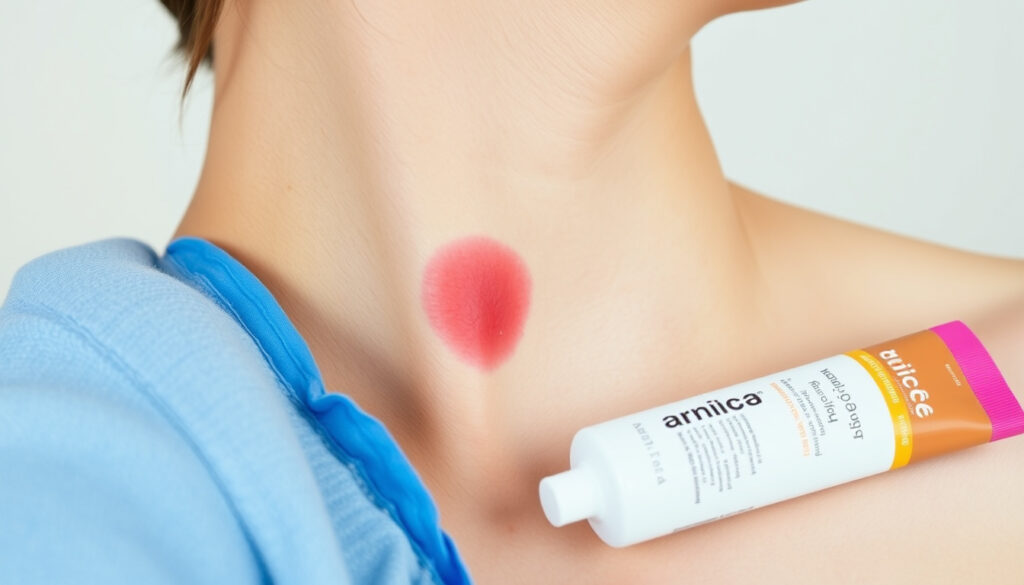
How to Get Rid of Hickeys Fast: Evidence-Based Remedies
You wake up, glance in the mirror, and there it is — a purple mark that wasn’t there last night. Few things kill confidence faster than a hickey you forgot to prevent, but the good news is that with the right steps you can fade it faster than you’d think without resorting to risky home remedies.
- Apply cold compress immediately (first 24–48 hours).
- Switch to warm compress after 48 hours.
- Use topical arnica or vitamin K cream.
- Avoid vigorous massage or scraping.
Average healing time: 5 to 12 days ·
Cold compress window: First 24 to 48 hours ·
Warm compress temperature: Around 104°F (40°C) ·
Home remedies examined: At least 15
Quick snapshot
- Cold compresses within the first 24 hours reduce bruising (Cleveland Clinic Health Essentials)
- Warm compresses after 48 hours help reabsorb trapped blood (Healthline)
- Arnica gel has anti-inflammatory properties (Women’s Health)
- Hickeys heal without treatment in 5–12 days (GoodRx)
- Apply cold compress for 10–20 minutes within the first hours (Cleveland Clinic)
- After 48 hours, switch to warm compress for 10–15 minutes (MedicineNet)
- Use arnica cream gently to reduce inflammation (Women’s Health)
- If the hickey doesn’t fade after 2 weeks, consult a doctor (Health)
- Conceal with green color corrector and full-coverage foundation (Women’s Health)
Four key facts about hickeys, one pattern: most are superficial bruises that respond to the same cold-then-warm routine as any other bruise — but timing matters far more than many people realize.
| Question | Answer |
|---|---|
| What is a hickey? | A bruise caused by sucking or biting that breaks small blood vessels under the skin. |
| How long to heal? | 5–12 days typically, depending on size and individual healing rate. |
| Can you speed up healing? | Yes, modestly with cold/warm compresses and topical arnica. |
| Are there risks? | Rare, but infection can occur if skin is broken. Some home remedies (e.g., toothpaste) can cause irritation. |
How do you get rid of a hickey fast?
Apply cold compress immediately
- Cold compresses constrict blood vessels and reduce bruising within the first 24 hours (Cleveland Clinic Health Essentials)
- Wrap ice in a towel and apply for 15 minutes, repeating several times on day one (GoodRx, quoting a board-certified dermatologist)
- Never apply ice directly to skin — use a cloth barrier to prevent frostbite (GoodRx, dermatologist advice)
Cold therapy is most effective in the first few minutes after the hickey forms. After that window, the benefit drops sharply, making timing the single most important factor in how fast you can fade it.
Use warm compress after 48 hours
- Warm compresses increase blood flow and help reabsorb trapped blood after 48 hours (Healthline)
- Apply a warm compress (around 104°F or 40°C) for 10–15 minutes at a time (MedicineNet)
- Some sources suggest a chilled spoon as an alternative to ice for the first day (Healthline)
Consider topical arnica or vitamin K cream
- Arnica gel may reduce inflammation and speed healing (Women’s Health, citing a dermatologist)
- Vitamin K cream is sometimes recommended twice daily for bruise recovery, but evidence is limited (Vice, expert roundup)
Avoid vigorous massage or scraping
- Massaging or scraping the hickey can worsen the bruise and prolong healing (Healthline)
- Some viral remedies (like using a whisk) are not backed by any clinical evidence and risk skin irritation (Health)
How long do hickeys go away?
Typical healing timeline
- Most hickeys heal in 5 to 12 days without treatment (GoodRx)
- Larger bruises take longer because more blood is trapped under the skin (Healthline)
Factors that influence duration
- Individual healing rate, age, and overall health affect how quickly the body reabsorbs the blood (Health)
- Applying cold early and heat later can modestly shorten the healing time (MedicineNet)
When to see a doctor
- If the hickey does not fade after 2 weeks, or becomes painful and warm to the touch, consult a doctor (Health)
- Rare complications include infection if the skin is broken, or an underlying blood clotting disorder (GoodRx)
Can ice lighten a hickey?
How cold therapy works
- Ice applied within the first 24 to 48 hours can reduce the size and darkness of the hickey (Healthline)
- Cold constricts blood vessels, limiting further bleeding into the tissue (Cleveland Clinic Health Essentials)
Best application method
- Use a cloth barrier and apply ice for 15 minutes at a time, several times on day one (GoodRx, dermatologist protocol)
- A chilled spoon from the freezer (30 minutes) can also work (Healthline)
What not to do
- Do not apply ice directly to skin — wrap in a towel to prevent frostbite (GoodRx, safety warning)
- Avoid extreme cold for more than 20 minutes at a time (Health)
The cold window is narrow — Cleveland Clinic explicitly states that cold compresses are not worth using unless it’s within the first few minutes after the hickey happens. Miss that window, and the benefit is minimal.
The implication: timing is everything with cold therapy, and relying on it after the first hour is unlikely to make a noticeable difference.
Can vaseline remove a hickey?
Why Vaseline is ineffective
- Vaseline does not break down blood clots or accelerate healing (Healthline)
- It may temporarily reduce visibility by softening the skin but does not remove the bruise itself (GoodRx)
Alternative moisturizing treatments
- Aloe vera gel or a gentle moisturizer can soothe the area without false promises (Women’s Health)
- Arnica cream is a better choice if you want a topical that actually targets inflammation (Vice)
Myth vs. fact
- No evidence supports Vaseline as a hickey remedy (Health)
- The only way to “remove” a hickey is to let the body reabsorb the blood — no cream can accelerate that process significantly (MedicineNet)
The catch: relying on Vaseline may delay seeking effective treatments during the critical early window.
How to hide a hickey in 2 minutes?
Color-correcting makeup technique
- Green corrector neutralizes red and purple tones (Women’s Health)
- Apply a thin layer of green concealer, then blend with full-coverage foundation (Healthline)
Concealer and foundation steps
- Use a full-coverage, long-wear concealer and set with translucent powder (GoodRx)
- For best results, apply in thin layers and build up coverage (Women’s Health)
Quick fix with a scarf or turtleneck
- Clothing or accessories are the fastest concealment method — no skill required (Health)
- Temporary tattoos or bandages can also serve as a distraction trick (Healthline)
Makeup works, but it’s a temporary fix — and if you’re covering a large hickey on the neck, a turtleneck or scarf is the most reliable, zero-effort option. The catch: you’ll need to reapply makeup if it rubs off.
The pattern: the fastest cover-up is often the simplest, but it only buys time while the bruise heals naturally.
Clarity check
Confirmed facts
- Cold compresses within first 24 hours reduce bruising (Cleveland Clinic)
- Warm compresses after 48 hours aid blood reabsorption (Healthline)
- Arnica gel has anti-inflammatory properties (Women’s Health)
- Hickeys heal without treatment in 5–12 days (GoodRx)
What’s unclear
- Effectiveness of toothpaste, whisk, or spoon methods (Health)
- Whether vitamin K cream significantly shortens healing time (Vice)
- Whether Vaseline or other moisturizers have any real effect (Healthline)
- Whether massaging the hickey ever helps vs. making it worse (Health)
Expert perspectives
“Cold compresses are not worth using on a hickey unless it is in the first few minutes after it happens.”
— Cleveland Clinic dermatologist, via Cleveland Clinic Health Essentials
“Apply ice wrapped in a towel for 15 minutes and repeat several times on day one.”
— Board-certified dermatologist, quoted by GoodRx
“Arnica cream can be used to reduce swelling and inflammation from a hickey.”
— Dermatologist, quoted by Women’s Health
“Try arnica or vitamin K twice daily for bruise recovery.”
— Expert roundup, Vice
The pattern across all expert advice: hickeys are bruises, and the same principles apply — cold early, heat later, and patience. The real risk is not the hickey itself, but the temptation to try unproven hacks that can irritate the skin or delay healing. For anyone who wakes up with a mark they’d rather not explain, the choice is clear: follow the evidence-based routine, or accept the wait. So for anyone with a hickey, the choice is clear: follow the evidence-based routine or accept the wait.
wikihow.com, youtube.com, justanswer.com, news.yahoo.com, tiege.com
Frequently asked questions
Where not to give a hickey?
Avoid areas near the carotid artery, jugular vein, or over the trachea — these areas are sensitive and can cause discomfort or, in rare cases, affect blood flow to the brain (Healthline).
Does a hickey count as a kiss?
Technically, a hickey is a bruise caused by suction, not a kiss. It’s a separate act that often involves biting or sustained sucking (GoodRx).
How to get rid of hickeys overnight?
No reliable method can remove a hickey overnight. The fastest approach is cold therapy immediately, then warm compresses after 48 hours. Arnica may help modestly, but realistic expectations are 5–12 days (Cleveland Clinic).
Does toothpaste remove a hickey?
No. Toothpaste has no active ingredients that break down blood clots. It can cause skin irritation and dryness. There is zero clinical evidence for it (Health).
Can you get a hickey on your neck safely?
Yes, but avoid the sides of the neck where major blood vessels are close to the surface. Stick to the back of the neck or shoulder area to reduce risk (MedicineNet).
Is it bad to pop a hickey?
Yes. Popping or breaking the skin can introduce bacteria and lead to infection. Always let the body reabsorb the blood naturally (GoodRx).
How to cover a hickey without makeup?
Use a scarf, turtleneck, high-collar shirt, or even a temporary tattoo or bandage. These are the fastest and most effective non-makeup concealment options (Women’s Health).
What is a hickey for guys?
A hickey has the same mechanism and appearance regardless of gender — it’s a bruise from suction. Concerns about visibility and social perception are common across all genders (Healthline).
Related reading
- Pictures of Boils on Private Area: Visual Guide & Treatment — Covers skin conditions with treatment advice, similar to hickey removal guidance.
- Female Upper Inner Thigh Pain: Causes, When to Worry, and Relief — An evergreen health explainer that mirrors the informational + expert-backed format of this hickey guide.
More related posts
 Love Island USA Voting: How to Vote, Without App, Results & Fixes
 Trolls (Film) Age Rating, Cast, LGBTQ Representation, Streaming
 How to Draw a Girl – Easy Step-by-Step Tutorial for Beginners
 Septic Tank Pumping Services Near Me – Costs, Frequency, Local Pros
 Hours in a Week: 168 Total, Work Hours, Breaks & Global View
 Best Horror Movies of All Time: Critics’ Rankings & Consensus
 Nissan Frontier Pro 4X – Key Specs and Off-Road Capabilities
 Dog DNA Test Kit – Top 2025 Picks Compared
