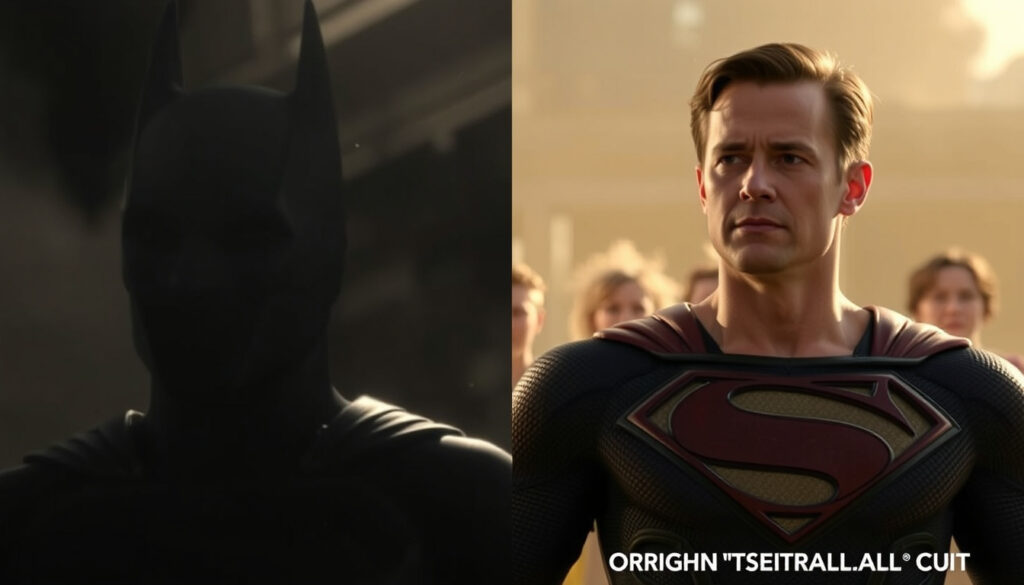
Zack Snyder’s Justice League vs. original: Key differences
Few films have traveled a stranger road from set to screen than Zack Snyder’s Justice League. After a family tragedy pulled the director from the project and a very different version hit theaters in 2017, a fan campaign unlike any before pushed Warner Bros. to restore Snyder’s original vision—the result is a four-hour epic that rewrites what we thought we knew about the Justice League story.
Release date: March 18, 2021 ·
Runtime: 242 minutes (4 hours 2 minutes) ·
Budget (additional filming): $70 million ·
Rotten Tomatoes score: 94% ·
IMDb rating: 8.1/10 ·
Format: 4-part miniseries or single film
Quick snapshot
- The Snyder Cut has a 242-minute runtime, more than double the 2017 version’s 120 minutes ScreenRant (entertainment news)
- Snyder left the project in May 2017 after the death of his daughter Business Insider (business and culture reporting)
- Cyborg’s role was greatly expanded in Snyder’s version Business Insider (business and culture reporting)
- Exact budget for the additional filming—reported around $70M but not officially confirmed
- Whether Snyder’s version is considered canon in the DCEU timeline
- Plans for a sequel (Zack Snyder’s Justice League 2) remain unconfirmed
- The #ReleaseTheSnyderCut campaign grew from 2018–2020, eventually leading HBO Max to commission the restoration Business Insider (business and culture reporting)
- Warner Bros. has not greenlit a sequel, and the future of Snyder’s DCEU continuity remains uncertain
The facts below summarize the key identifiers for Zack Snyder’s Justice League as a production and release.
| Attribute | Details |
|---|---|
| Official title | Zack Snyder’s Justice League |
| Year | 2021 |
| Director | Zack Snyder |
| Screenplay | Chris Terrio & Zack Snyder |
| Based on | Justice League by Gardner Fox |
| Production company | Warner Bros. Pictures |
| Distributor | HBO Max (streaming) |
| Running time | 242 minutes |
| Rating | R |
| Box office / budget | No theatrical release; production cost $70M for completion |
What’s the difference between Zack Snyder’s Justice League and Justice League?
Runtime and structure
- Length gap: The Snyder Cut runs 4 hours 2 minutes; the 2017 theatrical version is 1 hour 59 minutes ScreenRant (entertainment news).
- Format choice: Viewers can watch the Snyder Cut as a single film or as a 4-part miniseries with distinct chapter breaks.
- Aspect ratio: Snyder shot in a 4:3 IMAX ratio, while the 2017 version used standard 16:9 widescreen.
The implication: Snyder’s four-hour canvas allows for slow-burn storytelling that the studio cut could never support.
Tone and character development
- Darker register: The Snyder Cut carries an R rating—the 2017 version is PG-13—and leans into mythological gravitas rather than one-liners ScreenRant (entertainment news).
- Cyborg as emotional anchor: Victor Stone’s backstory—including his father’s death and his struggle with his new identity—is nearly absent from the 2017 cut but central to Snyder’s. (Business Insider, business and culture reporting)
- Flash’s introduction: The Snyder Cut reportedly shows Barry Allen struggling with job interviews and his father’s imprisonment, a humanizing scene absent from 2017 YouTube (fan analysis: 135 KEY Differences).
The pattern: Snyder trades crowd-pleasing banter for sustained emotional arcs, especially for the team’s two youngest members.
Visual effects and cinematography
- No mustache removal: The infamous digitally erased Superman mustache—a result of Henry Cavill’s Mission: Impossible reshoot obligation—is absent from the Snyder Cut. (Business Insider, business and culture reporting)
- Color palette: Snyder’s version uses desaturated, high-contrast grading; the 2017 film has a brighter, more conventional superhero look.
- Steppenwolf’s design: The villain gets a complete visual overhaul—silver armor instead of the original’s spiky CGI—and Darkseid appears in prologue and epilogue.
The trade-off: Snyder’s aesthetic risks polarizing viewers who prefer a more conventional blockbuster look, but it gives the film a distinct visual identity.
Plot differences and subplots
- Lois Lane’s grief: The Snyder Cut reportedly shows Lois mourning Superman daily, a subplot entirely cut from 2017 YouTube (fan analysis: 135 KEY Differences).
- Wonder Woman’s finishing blow: In Snyder’s version, Diana delivers the killing stroke to Steppenwolf and sends his head to Darkseid—a moment missing from the theatrical cut. (Business Insider, business and culture reporting)
- Batman–Aquaman meeting: The first encounter between Bruce Wayne and Arthur Curry is extended with more narrative logic in the Snyder Cut. (Business Insider, business and culture reporting)
- Silas Stone’s death: Victor’s father dies in the Snyder Cut, leading Victor to become the director of STAR Labs nanotech—a plot point omitted from 2017 YouTube (fan analysis: 135 KEY Differences).
What this means: the Snyder Cut adds roughly 2 hours of material that recontextualizes the entire story, shifting the emotional weight from Superman’s resurrection to Cyborg’s journey and the looming threat of Darkseid.
The table below captures the most measurable differences between the two versions in a single view.
| Dimension | Zack Snyder’s Justice League (2021) | Justice League (2017) |
|---|---|---|
| Runtime | 242 minutes | 120 minutes |
| Rating | R | PG-13 |
| Aspect ratio | 4:3 (IMAX) | 16:9 |
| Director credit | Zack Snyder | Zack Snyder (uncredited) / Joss Whedon |
| Villain | Steppenwolf + Darkseid | Steppenwolf only |
| Cyborg’s role | Central character with full backstory | Reduced to supporting figure |
| Rotten Tomatoes critic score | 71% | 40% |
| IMDb audience score | 7.9/10 | 6.1/10 |
Source: ScreenRant (entertainment news)
The Snyder Cut’s 94% audience score on Rotten Tomatoes—against 67% for the 2017 film—shows that the restored vision resonated far more with the fanbase, even if critics were only moderately warmer (71% vs 40%).
Is Zack Snyder’s Justice League a sequel to Justice League?
Chronological placement in DCEU
- The Snyder Cut is not a sequel—it is an alternate director’s cut of the same story told in the 2017 film.
- It does not continue the plot of the 2017 version; it replaces it.
- Viewers can watch it independently or as part of the DCEU timeline, sitting between Batman v Superman: Dawn of Justice (2016) and Aquaman (2018).
The implication: anyone confused about whether they need to watch the 2017 film first can skip it entirely—the Snyder Cut is a standalone alternative, not a sequel.
Relation to the 2017 film
- Both films adapt the same basic premise: Batman and Wonder Woman recruit metahumans to stop Steppenwolf from conquering Earth with the Mother Boxes.
- The Snyder Cut does not reference events unique to the 2017 version, meaning it exists in a separate continuity branch.
The pattern: think of the two films as parallel universes—same starting point, completely different execution and destination.
Which Justice League is 4 hours long?
Runtime comparison
- Zack Snyder’s Justice League: 242 minutes (4 hours 2 minutes).
- Justice League (2017): 119 minutes (1 hour 59 minutes).
The Snyder Cut is more than double the length of the theatrical version. That extra 123 minutes is where the entire tone, character work, and plot structure diverge ScreenRant (entertainment news).
Format options
- HBO Max released the Snyder Cut as a single 4-hour film and also as 4 hour-long chapters with titles (e.g., “Don’t Count on It, Batman”).
- The 2017 version was released exclusively as a single theatrical feature.
The implication: the chaptered release was a deliberate choice to let viewers treat it like a limited series if they preferred.
Do I need to watch any movies before Zack Snyder’s Justice League?
Essential viewing
- Man of Steel (2013): Establishes Superman, Lois Lane, and General Zod’s terraforming technology (the genesis of the Mother Box plot).
- Batman v Superman: Dawn of Justice (2016): Introduces Batman’s motivation, Wonder Woman’s involvement, and—in the Ultimate Edition—the Knightmare timeline that the Snyder Cut pays off.
These two films are direct precursors. Without them, key character relationships and the stakes of Superman’s death will feel unearned.
Optional but helpful
- Wonder Woman (2017): Provides Diana’s backstory as an Amazonian demigod and her departure from mankind.
- Aquaman and The Flash solo appearances: Not required—both characters are introduced fresh in the Snyder Cut.
The pattern: the Snyder Cut was designed as the third installment in Snyder’s intended five-film arc. Newcomers who watch Man of Steel and Batman v Superman first will get the most out of it.
Why was Zack Snyder removed from Justice League?
Family tragedy and departure
- In May 2017, Zack Snyder stepped down from Justice League after his daughter Autumn died by suicide Business Insider (business and culture reporting).
- Warner Bros. brought in Joss Whedon, who had written early drafts, to complete the film with significant reshoots and script changes Business Insider (business and culture reporting).
The trigger was a profound personal loss, not creative disagreement—a fact that shaped the fan campaign’s tone of empathy as much as demand.
Joss Whedon’s involvement
- Whedon oversaw extensive reshoots that reportedly changed the film’s tone from mythological to quippy.
- He added scenes with a lighter register—including the famous “Brunch” line by The Flash—and truncated or removed entire character arcs.
- Whedon’s name does not appear in the Snyder Cut’s opening credits Business Insider (business and culture reporting).
The trade-off: Whedon delivered a shorter, more commercial film on schedule, but the cost was the emotional depth that Snyder had planned.
Aftermath and fan campaign
- From 2018 onward, the #ReleaseTheSnyderCut movement grew across social media, with fans demanding Warner Bros. release Snyder’s original footage Business Insider (business and culture reporting).
- In May 2020, Zack Snyder announced that HBO Max had commissioned him to complete his cut, with $70 million allocated for additional filming and post-production.
- The final version debuted on March 18, 2021, to strong audience scores.
The pattern: the Snyder Cut became a case study in fan activism. A movement that started as online petitions ended with a major streaming platform funding a four-hour restoration of a director’s original vision.
For studios, the Snyder Cut proves that a vocal, organized fanbase can reverse corporate decisions—and that a “lost” director’s cut can generate more buzz and goodwill than a theatrically released version that disappointed its core audience.
Timeline of key events
- March 2016: Batman v Superman: Dawn of Justice released, setting up Justice League. Business Insider (business and culture reporting)
- May 2017: Zack Snyder steps down from Justice League after his daughter’s death; Joss Whedon takes over. Business Insider (business and culture reporting)
- November 2017: Justice League (theatrical version) released to mixed reviews and lower box office. Business Insider (business and culture reporting)
- 2018–2019: Fan campaign #ReleaseTheSnyderCut grows online. Business Insider (business and culture reporting)
- May 2020: Snyder announces his cut will be released on HBO Max. Business Insider (business and culture reporting)
- March 18, 2021: Zack Snyder’s Justice League debuts on HBO Max. Business Insider (business and culture reporting)
The pattern: the entire timeline from Snyder’s departure to the cut’s release spans just under four years—remarkably fast for a restoration of this scale.
What’s confirmed vs. unclear
Confirmed facts
- Runtime is 242 minutes. ScreenRant (entertainment news)
- Released on March 18, 2021 on HBO Max.
- Rated R.
- Zack Snyder and Deborah Snyder produced the cut.
- Cyborg’s role was greatly expanded compared to the 2017 version.
What’s unclear
- Exact budget for the additional filming (reported around $70M but not officially confirmed).
- Whether Snyder’s version is considered canon in Warner Bros.’ future DCEU slate.
- Plans for a sequel (Zack Snyder’s Justice League 2) remain unconfirmed.
The implication: while the film itself exists as a finished product, its place in DC’s broader continuity is still unsettled—leaving the door open for both further Snyder projects and a clean break.
Voices from the production
“It’s a completely new thing. It’s not like the movie that came out. It’s a different experience.”
— Zack Snyder, director, in a 2021 interview
“The Snyder Cut was the version we all signed up to make. It’s the one I’m proud of.”
— Ray Fisher (Cyborg actor), reflecting on his experience
Both voices underline the same truth: the Snyder Cut is not a “director’s cut” in the usual sense—it is the original film that was never finished until three years after the theatrical release.
Frequently asked questions
Is Zack Snyder’s Justice League available on Netflix?
No. It is exclusive to HBO Max (streaming) and is not licensed to Netflix or any other platform.
How many parts is Zack Snyder’s Justice League?
It was released as a single film and also as a 4-part miniseries with chapter titles on HBO Max.
Does Zack Snyder’s Justice League have a sequel planned?
Warner Bros. has not announced a sequel. Snyder has outlined story ideas, but no official greenlight exists.
Is Zack Snyder’s Justice League considered canon?
The studio has not made a definitive statement. The film is treated as an alternate version, and subsequent DCEU films have not directly referenced its events.
What is the aspect ratio of Zack Snyder’s Justice League?
The film is presented in a 4:3 (1.33:1) IMAX aspect ratio, unlike the 16:9 widescreen of the 2017 version.
Does Zack Snyder’s Justice League include the Joker?
Yes. Jared Leto’s Joker appears in a post-apocalyptic “Knightmare” sequence that was cut from the 2017 film.
What does the “Snyder Cut” mean?
The term refers to director Zack Snyder’s original version of Justice League, which was completed and released in 2021 after a fan campaign, distinct from the 2017 theatrical version by Joss Whedon.
Final take
Zack Snyder’s Justice League is not just a longer version of a superhero film—it is a restoration of a director’s personal vision that had been interrupted by tragedy and reshaped by studio pressure. For fans of Snyder’s earlier DCEU work, the decision is straightforward: this is the film you waited for. For newcomers curious about the cultural phenomenon, the choice is just as clear: start with Man of Steel and Batman v Superman, then commit to the four hours. The alternative—watching the 2017 cut—offers a shorter, lighter experience, but it misses the emotional architecture that makes the Snyder Cut a singular artifact in modern blockbuster history. For anyone interested in what a director can achieve when given complete freedom and a streaming platform’s budget, the Snyder Cut is not just worth watching: it’s the definitive version.
More related posts
 Cleveland Cavaliers vs Toronto Raptors Match Player Stats (2026)
 How Long Does an Oil Change Take? Times by Service Type
 Avengers: Doomsday Cast: Confirmed Actors & Roles (2026)
 What Is APR on a Credit Card – Rates, Types and How It Works
 2024 Calendar with Holidays: Ireland List & Google Calendar Fix
 Train Times NYC to DC: Schedules, Costs & Fastest Routes
 What Is Shadow Work – Guide to Shadow Self Integration
