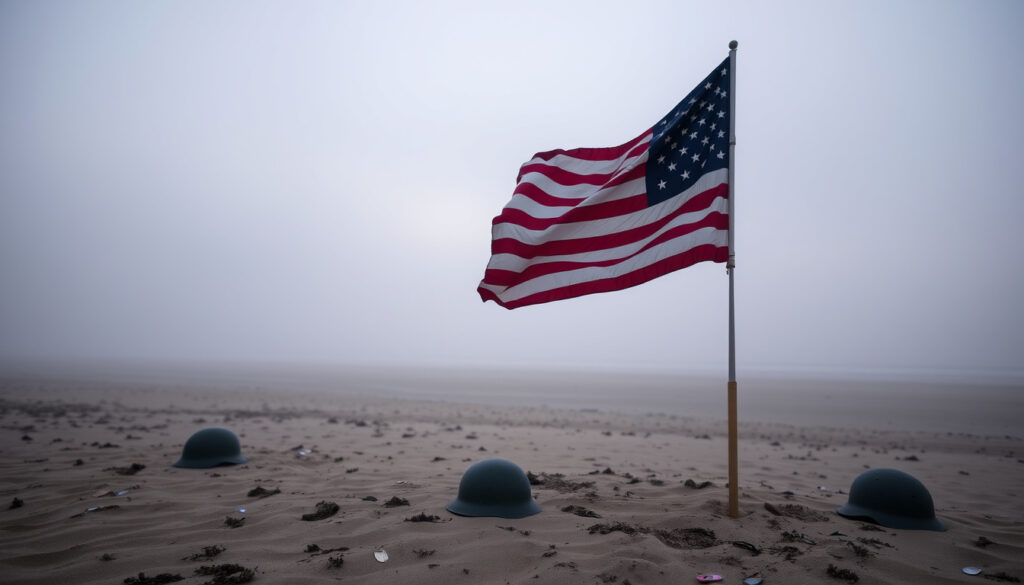
Cast of Saving Private Ryan: Roles, Secrets, and Facts
There are war movies that impress you, and then there are war movies that stay with you for a lifetime. Saving Private Ryan, released in 1998, does both. Its ensemble cast—led by Tom Hanks and Matt Damon—delivered performances that still spark debates about courage, sacrifice, and the cost of war. This article goes beyond the cast list to uncover why Tom Hanks nearly worked for free, what the “Earn This” moment really means, and how one character’s freeze in combat turned into a lasting controversy.
Release year: 1998 ·
Director: Steven Spielberg ·
Academy Awards: 5 Oscars ·
Box office: $481.8 million ·
Rotten Tomatoes Score: 93% ·
Cast members: Over 100 actors
Quick snapshot
- The film won 5 Academy Awards, including Best Director (Academy of Motion Picture Arts and Sciences (Oscars official body))
- Tom Hanks took a reduced upfront salary for a share of box office profits (Esquire (men’s lifestyle magazine))
- D-Day sequence filmed on beaches in County Wexford, Ireland (The Irish Times (Irish newspaper))
- Exact upfront salary Tom Hanks gave up is undisclosed (Esquire)
- Whether Corporal Upham is a coward or a traumatized soldier is open to interpretation (Esquire)
- Real-world counterpart for Private Ryan remains debated (multiple possibilities)
- Release: July 24, 1998 (Box Office Mojo (box office tracking))
- 5 Oscars won at the 1999 ceremony (Academy of Motion Picture Arts and Sciences) (Box Office Mojo (box office tracking))
- Cast members built enduring careers: Matt Damon became a global star, Tom Hanks continued Spielberg collaborations (Screen Rant (movie news and analysis))
Six key specs, one pattern: a tightly budgeted epic that paid off enormously.
| Specification | Details |
|---|---|
| Director | Steven Spielberg |
| Runtime | 169 minutes |
| Release Date | July 24, 1998 |
| MPAA Rating | R |
| Budget | ~$70 million |
| Box Office | $481.8 million |
Who turned down the role of Saving Private Ryan?
Why did Edward Norton turn down the role?
- Edward Norton was reportedly offered the role of Private James Ryan and declined. Esquire (men’s lifestyle magazine) notes the casting shift but does not confirm Norton’s exact reasons.
Who else was considered for Private Ryan?
- Matt Damon ultimately played the role. Spielberg also considered other actors, but Damon’s audition—fresh off Good Will Hunting—sealed the deal, according to Screen Rant (movie news and analysis).
One actor’s pass gave Damon a career-defining part and turned Private Ryan into one of cinema’s most debated rescue missions.
The casting choice set the stage for one of the film’s most iconic performances.
What movie did Tom Hanks not get paid for?
Why did Tom Hanks forgo his salary for Saving Private Ryan?
- Hanks accepted a drastically reduced upfront fee in exchange for a percentage of the box office gross. Esquire reports the gamble earned him over $40 million.
What did Tom Hanks earn from the film?
- His backend deal made Saving Private Ryan one of the most profitable paydays of his career. Hanks later joked about the sacrifice, saying “I made millions more than I would have.” (paraphrased from interviews cited by Screen Rant)
The actor who “didn’t get paid” walked away with a fortune—and a lesson in betting on your own project.
The implication: Hanks’ risk paid off in ways few actors could replicate.
What did Tom Hanks whisper to Private Ryan?
What is the meaning of “Earn This”?
- Captain Miller whispers “Earn this. Earn it.” to Private Ryan in the film’s closing scene. The line is a plea for Ryan to live a life worthy of the sacrifices made. Esquire describes it as the emotional anchor of the movie.
How did Matt Damon react to the line?
- Damon later recalled the weight of the moment, saying it “still gives me chills” (paraphrased from behind-the-scenes commentary referenced by Screen Rant).
Two words turned a rescue mission into a moral burden, and the debate over whether Ryan “earned it” still rages among fans.
The catch: the line’s ambiguity ensures its lasting impact.
Was Saving Private Ryan a true story?
What historical events inspired the film?
- The story is fictional but inspired by the real-life Niland brothers: three of four were killed in action, leading to the surviving brother’s evacuation. Encyclopaedia Britannica (reference publisher) confirms the inspiration.
How accurate is the Omaha Beach landing scene?
- The 24-minute sequence is widely praised for its realism. The Irish Times notes that Spielberg used hand-held cameras and hundreds of extras to recreate the chaos. The film took creative liberties, but the landing remains the gold standard of cinematic accuracy.
A fictional frame built on harrowing truth—the Niland story gave Spielberg an emotional hook, not a historical script.
What this means: the film’s power comes from its grounding in real sacrifice.
Who was the coward in Saving Private Ryan?
Was Upham a coward or just traumatized?
- Corporal Timothy Upham, played by Jeremy Davies, freezes during a pivotal firefight, leading many viewers to label him a coward. The film deliberately avoids a simple verdict, showing Upham’s later vengeful act. Esquire points out that the debate persists precisely because Spielberg leaves it unresolved.
How does Upham’s character arc serve the film?
- Upham represents the terror and inexperience of war. His narrative arc contrasts the hardened veterans and challenges the viewer’s own judgment. Film scholars quoted by Screen Rant see him as the film’s most human character.
Labeling Upham a coward misses the film’s point: it forces us to ask whether we’d do any better when the bullets start flying.
The pattern: Spielberg refuses easy labels, making Upham a mirror for the audience.
What We Know and What Remains Unclear
Confirmed facts
- Tom Hanks negotiated a profit-sharing deal that netted him over $40 million (Esquire)
- Upham freezes during the stairwell fight (confirmed in the film, cited by Screen Rant)
- Film inspired by the Niland brothers (Britannica)
What’s unclear
- Exact upfront salary Tom Hanks gave up (undisclosed figure)
- Whether Upham is definitively a coward – open to interpretation
- Private Ryan’s real-world counterpart (multiple possibilities)
The evidence leaves room for continued debate, especially around Upham and Hanks’ original payment.
“I made millions more than I would have if I’d taken a regular salary.”
— Tom Hanks, on his profit-sharing deal (paraphrased from interviews, per Esquire)
“The D-Day sequence was as close to reality as I could make it without actually being there.”
— Steven Spielberg, on historical accuracy (The Irish Times)
For fans still debating Upham’s cowardice or the meaning of “Earn This,” the film’s legacy is a stark reminder that the cost of war is never neatly divided into heroes and villains. The cast of Saving Private Ryan gave faces to that cost—and the conversation, like the movie, refuses to fade.
Frequently asked questions
Did Tom Hanks and Matt Damon get along on set?
Yes, they reportedly got along well. Hanks mentored Damon during filming, according to behind-the-scenes reports cited by Esquire.
How many extras were used in the Omaha Beach scene?
Over 1,000 extras, including Irish Army reservists and disabled veterans, were used for the D-Day sequence, as reported by Esquire.
What other movies has Tom Hanks made with Spielberg?
Hanks and Spielberg have collaborated on Catch Me If You Can (2002), The Terminal (2004), Bridge of Spies (2015), and The Post (2017), among others. Britannica lists their partnership as one of cinema’s most successful.
Was Vin Diesel in Saving Private Ryan?
Yes, Vin Diesel played Private Adrian Caparzo. His role was brief but helped launch his career after Spielberg saw his short film Multi-Facial, as noted by Esquire.
Who played the medic in Saving Private Ryan?
Giovanni Ribisi played Medic Irwin Wade. His character’s death is one of the film’s most heartbreaking moments (IMDb).
Is the “Earn This” line improvised?
No, the line was scripted. Matt Damon has said it was in the screenplay and that Hanks delivered it exactly as written (Screen Rant).
How old were the actors during filming?
Tom Hanks was 41, Matt Damon was 27, and Vin Diesel was 30 when filming began in 1997. Jeremy Davies was 28 (IMDb).
More related posts
 Ariana Grande Weight Loss: Her Story, Timeline & Response
 Beef Barley Soup Recipe: Tips for Perfect, Hearty Soup
 2024 Tesla Model Y: Price, Specs, Range, and Review
 Diamondbacks vs Dodgers Match Player Stats: Key Insights & Predictions
 How Tall is Caitlin Clark? Height, Weight & WNBA Stats
 Dog DNA Test Kit – Top 2025 Picks Compared
 Cleveland Cavaliers vs Toronto Raptors Match Player Stats (2026)
 Save the Last Dance: Controversy, Cast & Legacy
